Discover the medicinal uses of indigenous plants
Herbal remedies
Master basic bush survival skills
Into the wild
Watch a magical sunset at a watering hole
Golden hour
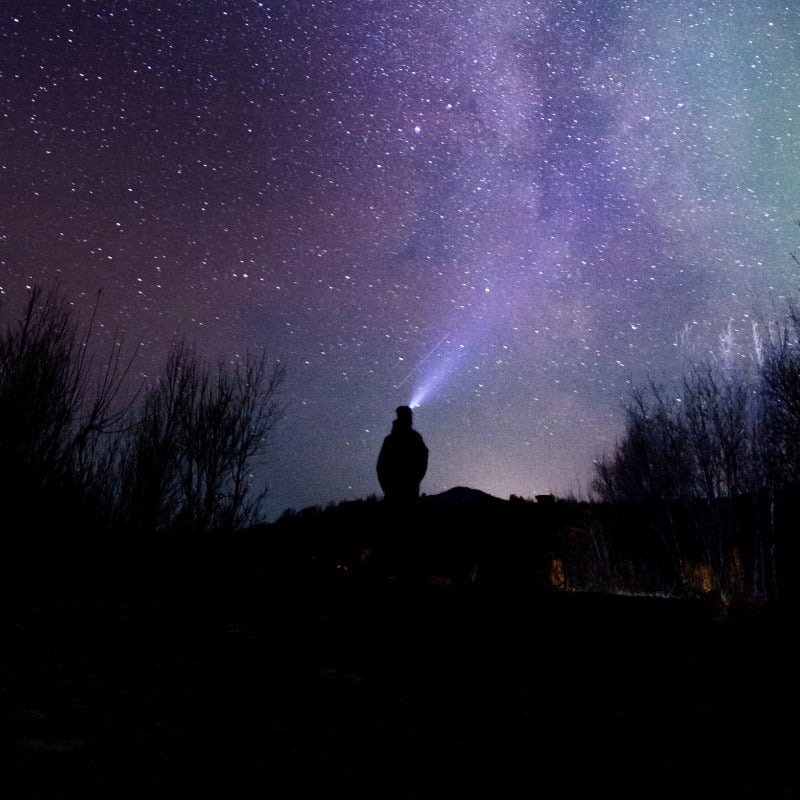
Enjoy a night sky safari
Written in the stars

 35 hrs of fieldwork per week
 1:6 participant to staff ratio
 Includes GVI Experiences
Travel to a private game reserve in South Africa – home to lion, leopard, elephant, buffalo, rhino and cheetah. Here you’ll live and work alongside an international research team and contribute to critical wildlife conservation initiatives. Working in partnership with locally-led partner organisations, our program objectives are aligned with the United Nations Sustainable Development Goals.
Witness nature unfiltered, from a lion taking down its prey, to newborn cheetah cubs playing for the first time, or even a stand-off between two massive elephant bulls. Experience the African savannah landscape on safari. Unlike a conventional safari trip, this program allows you to play an active and meaningful role in the research and long term conservation of South Africa’s natural resources.
No special skills or qualifications are required to join this program, as all training will be provided by our experienced team in the field. Learn how to track and identify predators, like lions and cheetahs, and megaherbivores, like elephants and rhinos. This data is used by reserve management and local conservation organisations to develop an accurate picture of predator impact on prey populations, determine the spatial movement, behaviour, social structure and genetics of specific species. This information helps management and landowners maintain a healthy balance of natural resources in the reserve, helps conservation organisations further their objectives, and ultimately assists with conserving important African species and habitats. You will also have the opportunity to participate in our environmental conservation program which we run in the local community.
We do two research drives daily, focusing primarily on specific sightings – prioritising cheetahs and rhinos. Our second drive involves activities like bird surveys, conservation work, and litter pick-up initiatives. Please note the hours in the field may be long, which can be tiring in the heat of the African sun.
This program offers durations up to 24 weeks. Speak to one of our enrolment managers for more details of extending your stay in-country.

Develop data collecting skills and gain work experience on conservation projects that are focused on preserving this ecosystem’s unique biodiversity.

Get the full safari experience with this opportunity to work with and live among some of the world’s most beautiful and vulnerable wildlife.

Contribute to ongoing environmental projects that address critical challenges aligned to the global UN SDGs.

Join local conservation partners and qualified professionals to ensure your efforts are highly ethical, meaningful and sustainable.

Venture outside typical travel itineraries to get exclusive access to extraordinary remote habitats, rare species and unique ecosystems.

Share epic experiences with like-minded, passionate changemakers from all over the globe.

With expert local staff and 24/7 support at every step – you can relax and enjoy the experience stress-free.

Disconnect from the digital world and reconnect with nature, yourself and your purpose.
Some of the example typical activities you could participate in on this program.

Learn how to identify species, collect data and monitor animals. Get trained in health, safety, and ethical considerations for conservation work.

Collect data on local bird species and upload it to citizen science databases. This data is used by researchers all over the world.

Gain experience identifying and monitoring your chosen focus species.

Help rehabilitate land degradation and erosion, remove alien species and assist with other reserve maintenance projects.

Collect data on megaherbivores like rhino, elephant and buffalo. Data will include population dynamics, spatial utilisation, and group associations.

Get involved in environmental education awareness projects, teach English, or contribute to projects proposed by our local partner organisations.
Some of the partners we work with on base.


Live in the heart of the South African savannah, sharing a renovated farmhouse with qualified guides from the Field Guides Association of Southern Africa, other GVI staff, and participants from around the world. The base is incredibly remote, and tourists are unable to visit. Completely open to the bush and close to a dam, animals frequently visit the property, including elephants, buffalo, impala and leopards.
Boasting more than 20 thousand acres of open savannah, our research station in Limpopo features some of the best wildlife viewing of any private South African game reserve. It’s home to all of the Big Five, including the elusive leopard, as well as cheetahs and spotted hyenas.
Rise each morning to the sound of African birdsong at dawn, before heading out in an open-topped safari vehicle to conduct research vital for the conservation of key predator species, like cheetahs and lions. Heading back to camp when the sun is at its height, you’ll input data, study, assist with cooking or tidying, or relax with the team in our shared outdoor social space. In the early afternoon, when the sun starts to set over the Drakensberg mountain range, you’ll head out again to conduct further research. Returning when the stars are at their brightest, you’ll share a meal and the day’s stories with your team. In your free time, visit Kruger National Park, an hour’s drive from your accommodation, travel to the scenic Panorama Route, which takes you through the magnificent Blyde River Canyon, or spend some time in the local town called Hoedspruit.
With one of most biodiverse ecosystems in the world, and home to many of the most threatened African wildlife species, South Africa is a nature, wildlife, and adventure lover’s paradise.

Lodgings consist of large dorm-style rooms with shared bathrooms. The base is solar-powered to ensure less impact on the environment. When it’s time to relax, there are hammocks...

Transport to conduct field research is provided by our vehicles and drivers. We have one 15-seater taxi for organised transfers, which includes w...

Our base has good connection to local cell phone towers, and participants with unlocked mobile devices can purchase local SIM cards during weekly trips into town. There is Wi-Fi...

Participants make their own breakfast, which is continental style, including bread and spreads. For lunch, it’s usually sandwiches and salads. Dinner might be anything from a tr...

Limpopo is well-known for its warm climate. Sunny days and low rainfall are the norm on most days throughout the year. Summer, starting in October and ending around March, coinc...
We want you to make the most of the chance to live in – and contribute towards – the most diverse and unique wildernesses and communities on earth. Introducing GVI Experiences – immersive adventure, cultural and wellness activities exclusive to GVI that have been specially designed in collaboration with our local partners to support and stimulate sustainable economic development.
Enhance your impact. Expand your adventure. Explore your world.
Joining a GVI program not only allows you to collaborate with communities or work toward preserving unique ecosystems – but it also offers plenty of opportunities to explore the surrounding area or travel further to see what other parts of the region have to offer over weekends.
Field staff are a great source of advice and have helped us put together the following information on local travel options. You can choose to travel before or after your experience with GVI (subject to immigration restrictions), solidifying the lifetime friendships you’ve established on the program. Please note that the below options are not included in the program fee, and would be up to you to arrange at your own expense.

The Panorama Route in Mpumalanga province is one of the most scenic parts of South Africa. It runs along the eastern edge of the Drakensberg, the...

Choose your adventure: a solo self-drive or team up with a skilled guide in a custom open safari vehicle (OSV). Opt for a day trip or an overnigh...

Further south, In the province of KwaZulu-Natal, you’ll find the historic Zululand, as well as the grave and memorial of the famous leader, King ...

Experience the unique cultural milieu of the coastal town of Durban. On the coast of the Indian Ocean, its warm waters make the city a haven for ...

Watch the sunset from the top of Table Mountain (you can hike to the top or take the cableway up and down) or walk the circular route to the top ...

The rusty sandy expanse of the Kalahari stretches from South Africa to Namibia and Botswana. Home to dunes reaching the heights of several buildings and a diverse range of wildl...

The Drakensberg mountain range is dotted with canyons, and many people experience the exhilarating thrill of bungee jumping for the first time he...

South Africa might not be top of mind when considering skiing destinations. Tiffindell Ski Resort in the Drakensberg is South Africa’s only ski a...

There are 19 national parks you can visit during your stay in South Africa. Run by South African National Parks (SANParks) the closest park to us is the famous Kruger National P...
Engaging intimately with a new context teaches global awareness, adaptability and critical thinking – skills highly valued in the modern marketplace. Local and cultural immersion is encouraged on all our programs around the world, and will also be one of the most enjoyable aspects of your experience. Luckily, there are many different activities that you can get involved in during your free time, or before and after your program.
On our community programs, the focus is on cultural topics, while on marine or wildlife programs the emphasis is more on the environmental element. Use your evenings and weekends to explore topics like local cuisine and religion, or how sustainable development challenges are affecting local contexts.

From a fisherman’s meal of fish and chips to a spicy curry with naan, the diversity of South Africa lives in the dishes available in most communi...

The most dominant religion in South Africa is Christianity. As a land of acceptance and diversity, you will find many people of different faiths,...

The northernmost region of South Africa and home to the Kruger National Park, the Limpopo province feature...

Possessing one of the highest biodiversities in the world and the home to many of the most threatened African wildlife, South Africa is a nature, ...

If you’d like to find out what the experience of joining a GVI project is really like, simply contact us and we’ll put you in touch with one of our many Alumni.
We’ll try to match you to an Alum based on your location, nationality, age, stage of academic career, gender, and program interests. This allows you to gain insights into the experience that is most relevant to you.
Depending on your location you might be able to speak to an Alum over the phone or online, or meet up with them face-to-face at a coffee shop nearby. We also run a series of small events around the world where you can speak to GVI Alumni, Ambassadors and staff members.

Program Manager
This is Sophie, she is our Program Manager at GVI Limpopo here in South Africa. Originally from Northern Ireland, Sophie’s journey with GVI start ...


When it comes to support, we ensure that each participant is provided with unparalleled, 360 degree support, from your initial contact with the GVI Family, all the way through your program, and even after, as you become part of the GVI Alumni Team.
As part of this promise, we will ensure, whenever possible, that one of our dedicated staff will be available to meet you at the airport. In most locations, we also set up a Whatsapp group to help with managing airport arrivals.
We will arrange with you prior to your departure that, should you arrive in the agreed upon pick up window, a member of our staff will be there to welcome you, easily identifiable in a GVI t-shirt or holding a GVI sign and wearing a friendly smile.
This means there will be someone there to greet you as you land, and from there you will be transported to your GVI base to start your adventure and meet the rest of your team.

All of our programs have short-, mid- and long-term objectives that align with the United Nations Sustainable Development Goals (UN SDGs). This enables us to report on our collaborative impact across the world in a streamlined manner, measuring which UN SDGs we are making a substantial contribution to. Furthermore, this will help our local partners and communities measure and visualise their contribution to the UN SDGs.
Prior to your arrival on base, you will be educated about the UN SDGs. Then once you arrive on base, you’ll learn about the specific goals we have in this particular location, our various objectives, and also clarification of how your personal, shorter-term involvement contributes to these.
Our aim is to educate you on local and global issues, so that you continue to be an active global citizen after your program, helping to fulfil our mission of building a global network of people united by their passion to make a difference.

Many of Africa’s wildlife species are under threat. Private reserves, like Karongwe, where we run our conservation projects, are a haven for at-risk species. Karongwe is located within the UNESCO protected Kruger to Canyons Biosphere Reserve. This biosphere represents only 1.4% of South Africa’s land, but contains 55% of the total natural life found here.
Karongwe Private Game Reserve
Karongwe Private Game Reserve was once made up of individual farms. In 1998 the landowners banded together and created an 8,500 hectare game reserve. In 2001 GVI was brought onto Karongwe to assist the Karongwe Ecological Research Institute (KERI) in their monitoring of the large predators and herbivores on the reserve. In 2006, GVI Limpopo took over this role. This helps reserve management understand the impact of predators on the prey species, and maintain a healthy ecosystem by ensuring a balance of natural resources. Predators are often tracked using telemetry, or monitored using camera trapping. Through this we learn how they use the space within the reserve, what their feeding behaviour is like, how they interact with one another and other predators. Herbivores might be counted, their numbers, age, and sex listed, and their impact on vegetation noted. This data is presented to Karongwe management and landowners on a weekly, monthly, half-yearly and yearly basis. We also assist with anti-poaching efforts by monitoring and recording the movements of individual rhino on the reserve through the use of our ID kits. Sometimes we assist with the upkeep of the reserve’s fences and roads. We also assist with removing old farm infrastructure and invasive alien plant species, and work on soil rehabilitation to help with habitat recovery.
Cheetah Research and Conservation
Cheetahs are a species listed as vulnerable on the IUCN Red List Of Threatened Species. They are a rather fragile species as they naturally have a low genetic diversity and are not able to compete well with other larger, stronger predators like lions and hyenas. One aspect of our study focuses on how cheetahs make use of their kill, as well as prey preference. We record how much time the cheetahs spend on their fresh kill as well as what potentially encourages them to leave. This helps to know how they are dealing with competition with other predators. We also collect data on breeding success and interactions with other predators.
Bird Research and Conservation
We also contribute to the South African Bird Atlas Project (SABAP2), one of the most important bird monitoring projects in Southern Africa – and its largest citizen science database. Because they are popular and well-studied, birds are appropriate indicators of ecosystem health. The availability of significant, long-term datasets in South Africa makes birds a good choice for an early-warning system for climate change impacts and other systematic, ecosystem-wide threats to broader biodiversity. The number of critically endangered birds in South Africa has increased from 5 in 2000 to 13 in 2017. One group in particular features particularly dramatic statistics: 22 of the 79 raptors occurring in the northeastern region of the country are now considered threatened. Of concern are the low numbers of scavenging raptors. Most of South Africa’s vulture species, as well as the tawny eagle and the bateleur (two obligate scavengers), are listed as endangered or critically endangered. In December 2016, SABAP2 featured 9 million records across 17,339 pentads, 5 minutes of latitude by 5 minutes of longitude, squares with sides of roughly 9 kilometres, in South Africa, Lesotho and Eswatini. The selection of sites and habitats critical to bird conservation rely on this data. All other conservation initiatives depend on the results of the bird atlas, to a greater or lesser extent. One cannot determine the conservation status of a species unless you know its range and how this is changing.
Environmental Education
We also conduct environmental education programs at one primary school and one day care centre in the area. We make ourselves available for conservation-focused mini-projects. This might include documenting bird of prey nesting sites or the creation of lists for microfauna species in the reserve. In the past we have partnered with a range of conservation organisations, as well as academic institutions like the University of Cape Town, the University of Pretoria, and Bournemouth University. Exact project details are also always subject to change due to weather conditions, time of year, and animal movements. As the requirements of our partners change over time, so do the details of our projects.
The specific United Nations Sustainable Development Goal (UN SDG) we work on in Limpopo is Goal 15: Life On Land.
Over the past 21 years, GVI Limpopo has:
1. Presented at over 70 land owner meetings.
2. Assisted more than 1,200 children in learning about the environment and wildlife (since 2014).
3. Constructed 3 day care centres (since 2015).
4. Recruited 17 national scholarship students (since 2013).
5. Taken more than 300 learners on game drives.
6. Supported over 20 partner organisations.
7. Published 17 peer-reviewed papers.
8. Placed tracking devices on 25 individual animals, including cheetahs, lions, hyenas, leopards and wild dogs.
9. Monitored 375 individual animals and rare game.
10. Assisted with over 25 rhino dehorning events.
11. Raised over £46,000.
12. Hundreds of participants have passed through our doors, and many have gone on to have careers in wildlife conservation (or another aspect of the natural environment), due to the experience gained with us.
GVI Limpopo’s Long-term Objectives:
1. Provide long-term and consistent data for the Karongwe Game Reserve Association to assist them in making decisions based on scientific data.
2. Increase local awareness of GVI’s purpose and impact on Karongwe PGR.
3. Increase scientific output.
4. Contribute to three large-scale reserve management projects alongside the warden in accordance with the reserve’s management plan.
5. Increase our in-country capacity by providing environmental and conservation education and training, and through community upliftment projects.
The best decisions in international development and conservation cannot be made without accurate and up-to-date data or informed research. Our many field teams around the world collaborate with local and international partners to analyse data and draw conclusions. In addition, many of our participants have used research they have collected on their various GVI projects to complete their Masters, Doctorate, or postdoctoral studies. We also run a fellowship program which connects postdoctoral researchers at globally-respected universities with our many sustainable development programs around the world to support their research and ensure continuous improvement of our best practices on base.

Master of Arts in Conservation Biology, thesis
Austral Ecology
Ecology and Evolution published by John Wiley & Sons Ltd (Open access)
South African Journal of Wildlife Research
Science 346, 79 (2014)
Poster abstract for RCUK conference
Ecological Society of America: Preprint
Dissertation – BSc Ecology
BSc Dissertation
Austal Ecology: In Press
Oryx
Ecology
BSc Dissertation
Dissertation – BSc Equine Studies June 2011
Ecology
Forest Ecology & Management
Journal of Mammalogy
DTech Nature Conservation Thesis
PLoS ONE
African Zoology
PLoS ONE
Mtech Nature Conservation
Master of Science (title TBC) – thesis
A GVI program is an investment in your career. No matter which you choose, you will be working toward improving your employability by mastering new social skills, gaining further technical expertise and earning qualifications in many cases. Most of our staff are, in fact, GVI Alumni, and we have helped many of our Alumni discover, move toward, and earn their own personal dream jobs. Each program includes introductory workshops, ongoing presentations, as well as on-the-ground professional support provided by our very own trained staff members. In addition, our training programs are critical for helping us to ensure the long-term impact of our sustainable development projects around the world.
Learn about the importance of child and vulnerable adult protection best practices and how to apply them while on project.
Introduction to the history and evolution of sustainable development, the United Nations Sustainable Development Goals (UN SDGs) and how these related to your project work.
Learn about our country locations and further opportunities available to you during or after your program.
Learn about gender equality, skills development and examples of income generating activities.
Learn about our empowerment principles.
An introduction to different survey techniques and best practice guidelines for surveys; introduction to different types of data and how to record information via a datasheet.
Learn about biodiversity and how biodiversity is measured, and classifying different species and how to identify species that indicate the health of the habitat.
Learn how to apply first aid protocols and carry out cardiopulmonary resuscitation, CPR. This is only offered for participants staying for two weeks or longer.
Learn different teaching techniques and develop your confidence teaching students in a range of age groups.
GPS, global positioning system, coordinations are a popular means of recording locational data important for conservation work. It is used to determine a specified area, record distances between points of interest and locate previously recorded points, animal sighting data. Participants receive training on how to use GPS systems to record this data.
Learn how to monitor the movement of animals using VHF (Very High Frequency) telemetry.
Learn about the many birds in Southern Africa and specifically those that are found in Karongwe. Find out how to identify key bird species.
Using the UN’s Sustainable Development Goals, learn how small changes to your daily routine can make a big difference to the planet’s resources.
Learn about measures South Africa, and other countries, are taking to preserve their iconic natural habitats and wildlife as well as how you can contribute. This includes exploring the importance of wildlife and wilderness for the well-being of generations of humanity.
Data is collected daily and recorded by an allocated data person under the supervision of a staff member. This is to ensure that the data is kept as accurate and consistent as possible. We collect data using the mobile app CyberTracker, which has been set up specifically for our program, allowing efficient, paper-free data recording in the field. Participants will learn how this mobile app works during the training week.
Learn about best practices for conducting a biological survey in any environment.
Learn about the many reptiles in Southern Africa, and how to identify the main ones of importance in Karongwe. This is only offered for participants staying for two weeks or longer.
Most of the research we carry out in Karongwe is on mammalian species. Learn about the main mammals found in the reserve and how to identify them.

If you have a passion for wildlife conservation then this course will provide you with the foundational skills and understanding needed to achieve your conservation-related goals. You’ll learn about the various methods of wildlife monitoring, as well as exploring the delicate balance involved in terrestrial ecosystem management. After successfully completing the course, which you have the option of doing prior to your in-country program, you’ll receive a certificate from the University of Richmond.
This online course, valued at £295, is included in all volunteering programs. Full course details can be found here.
We won’t sugarcoat it — traveling abroad is usually a complex process that carries an element of risk. But this is exactly why we’re passionate about providing extensive support throughout the process as well as the highest safety standards during the in-country phase. We believe that volunteering abroad should not only be impactful, but an enjoyable experience that carries as little risk as possible. This is exactly how we’ve been able to maintain our reputation as the most highly respected volunteering organisations in the sector over the past two decades.


It takes courage to book a GVI program, get on a flight, and head off to somewhere new. Volunteering offers a level of cultural immersion that typical backpacking or holidays ju...

As the saying goes: ‘Expect the best, plan for the worst’. Cliched or not, we take it to heart. This tenet is at the core of how GVI operates when it comes to promoting the heal...

The weather isn’t just a topic for polite small-talk here at GVI. We have emergency action plans in place for all scenarios. So when the weather, or other natural forces, takes ...

Once GVI has matched a participant to a program that suits their passions and goals, our team aims to set the right expectations for them. In the event that false expectations a...
Make the most of our unique programs with these exclusively curated local adventure and wellness experiences.